Showing posts with label professional development. Show all posts

Wednesday, November 23, 2022

Higher ed degrees... worth it?

When I first decided I wanted to get a teaching license back in 2008, I already had a bachelor's degree in a non-education field, so it made sense for me to get my master's degree while pursuing my teaching license. I was in the state of Virginia at the time and they were also pushing people who wanted to get their teaching license to get their master's degree because it allowed them to be considered "highly qualified". To be honest, I don't feel like the master's degree made me any more qualified than those who get their teacher degrees at the bachelor's level. In Virginia and Maryland (where I taught after Virginia) both compensated teachers for receiving higher degrees. However, now that I am in North Carolina, I am learning that they do not compensate for a degree higher than bachelor's, unless you received it before a certain date. (Luckily mine was earned before this date!)

So this made me think... why do we continue to push teachers to spend money out of their own pockets to pursue a higher degree. Do "master" level courses really make you any more knowledgeable than "regular" courses that can be taken to continue learning? I have taken many different courses throughout my career and honestly, some of the better ones have been the quick, more specific, professional development courses taken through a local online college for MUCH less than a masters-level course.

I saw numerous colleagues in Maryland continue to pursue higher degrees so that they could move up to a different pay scale and make more money, but is it truly worth it? The time, effort, and money that go into completing a degree is A LOT. You know what would help, if states/counties would compensate teachers like the professionals that we are. Teachers should not have to work multiple jobs, have roommates, or rely on a significant other's income in order to survive day-to-day living.

Let's go back to this idea of "highly qualified". Why do we feel a master's degree makes one highly qualified? Are you trying to tell me, that me, a brand new teacher that just so happens to have a master's degree, is more qualified at teaching than someone who has been there 3-5 or more years?? I feel like there are WAY more other ways that we could determine if a teacher is highly qualified than pushing them into debt to get a degree that may or may not enhance their teaching.

Now, some may disagree with this, but I do feel like National Board Certification is a great way to achieve the highly qualified status. I know that some states compensate for this certification as well and it cost WAY less than getting an additional degree. It allows you to showcase the great things you are doing in the classroom along with the knowledge of education (shown on a test in component 1).

I'm starting to ramble, so let's wrap this up. Teachers, before you go for that higher degree, please make sure that it is going to truly help you in your education career!

Friday, March 11, 2022

Google Slides Can Do That!

When my principal shared with us back in December best practices that we should be doing in the classroom, I felt the collective sigh from the staff members who felt like this is just one more thing we needed to do. Many of the best practices were things that we already know how to do, but we needed a way to do them in a more digital-friendly way to accommodate our new norm of using technology to teach.

I also wanted to showcase how technology can help you work smarter, not harder (one of my favorite sayings!) by having things saved in one place or preparing your objectives, lessons, etc. ahead of time.

Enter Google Slides!

Check out the presentation below to see how I use Google Slides to...

  • create objectives
  • monitor students
  • create manipulatives (both printable and digital)
  • create writing assignments
  • organize small group instruction
  • easily manage rotations/centers
  • create a word wall
  • organize HOT questions for the entire school
  • have active discussions
  • create or organize anchor charts


Monday, December 7, 2020

Nearpod, Camp Engage Fall Notes

Over the summer I signed up for the Camp Engage event put on by Nearpod. At the time I wasn't sure which platform I was going to use for my interactive presentations and even throughout the school year I have gone back and forth some, but after attending the Camp Engage Fall event I am now sticking with Nearpod.

Nearpod has some great new updates:
  • interactive videos (choose from videos already in the Nearpod library, find a video on YouTube or upload one from your computer); add in some questions and now your video has built in check points
  • Microsoft Immersive Reader (ability to read and interact with raw text on the slides)
  • partnerships (it seems there are new partners every day bringing even more engaging content to Nearpod); my new favorite is Calm, where you can build in some much needed mindfulness activities as we continue this journey of virtual learning
I knew about Immersive Reader as it is popping up in many technology tools now, but the session by Angie Bakke showed me all of the amazing things it can do!
  • it reads raw text (this means it needs to be words typed on the slide)
  • it highlights the words as it reads them
  • you can change the pace of how it is read
  • select only one line of text highlighted at a time
  • select parts of speech (for example, you can choose for all adjectives to be labeled in blue)
  • translate words into over 60 languages!
In Julie Cobb's session and Tiffanye McCoy-Thomas's session, I learned about some ways to take Nearpod to the next level in my instruction.
  • start your lesson with some type of drawing slide (for example, draw a face of how you are feeling). This gives students something to do as you are waiting for others to join your lesson
  • make the objective slide interactive (asks students to highlights important words that they are unfamiliar with). This can lead to a great discussion about academic vocabulary that may show up during the lesson
  • if you have an website or some resource you want students to use while answering some of the interactive question types, add it with the directions at the top of the slide
One of the struggles that I have been having with Nearpod in my whole group sessions, is that some of my students are able to work on their own to complete the activity after the mini-lesson, while some students need to continue working together as a whole group. I wish there was an ability to seamlessly switch from instructor-paced to student-paced in the middle of the lesson. However, Phil Wagener shared a great work around for this in his session.

I created a new Nearpod lesson with the independent activity. I set it up as student-paced and then copied the link. I then created a Google Presentation slide with 2 options. Stay and work on the activity together with the teacher (this option requires the students to just stay where they are) or they can choose to work on the activity by themselves. If students want to choose this option then they click on the image, which takes them to the student-paced version. In my original Nearpod lesson that I used for my mini-lesson, I created a Web Content slide. The link I used goes directly to the Google Presentation slide that I just mentioned. This allows students to easily click on the Nearpod link without having to go back to Google Classroom or enter a new code, etc.


I love learning new things about the technology I already know and am using. I hope that Nearpod continues to grow and adapt to our ever-changing needs, as well as, continue to host these amazing, relevant, and FREE professional development opportunities for teachers.

If you want to check out one of my interactive Nearpod lessons click this link:
https://share.nearpod.com/Wq8O9460xbb 

Instagram: @mrspotterstyle
Twitter: @apotter730


Monday, June 29, 2020

Book Review: Becoming the Educator They Need

Becoming the Educator They Need: Strategies, Mindsets, and Beliefs for Supporting Male Black and Latino Students
click on image to go to Amazon.com

In light of everything that has been going on in the country lately, our assistant principal decided to host a book study using this book. Our school is made up about 49% Black students, 49% Latino students, and the other 2% a mixture of white and Asian.

My one big takeaway from this book.... RELATIONSHIPS MATTER!!

Robert Jackson speaks about his own experiences growing up as a Black boy and the struggles that he faced. He also became an educator and shares his experiences in dealing with Black and Latino students, especially the boys.

Here are some quotes from the book the resonated with me:
  • "When educators take one look at some young men of color, they judge them based on the fact that they look like what they perceive offenders look like."
  • "Appearance alone should not result in a young man being labeled 'not teachable'."
  • "Your stereotypes and biases can be dream killers. If you choose to be open and accepting, you can become a dream restorer."
  • "There is no perfect educator out there. Everyone has flaws. Having empathy will give you what it takes to turn any student around."
  • "When you feel sorry for your students, your expectations of them are lowered."
  • "You cannot teach those who you can't reach."
  • "Educators lose opportunities for their students to see their human side when they walk around acting as though they don't make mistakes."
While I feel that one of my strengths as an educator is my relationship with my students, I always feel I have room to grow. This book allowed me to open my eyes to perspective of my Black and Latino students. They may act like they don't care, they may have days where they want to have their hood up all day, but as educators rather than focusing on the negative, we need to try to get to know them and understand why they feel this way or why acting a certain way, because 99% of the time there is something else going on in their life that we probably don't know about.

My first year of teaching in 2010, I had a Latino student who I struggled with all year. Just recently, he found me on social media and sent me a message just to say hi and let me know that he graduated from high school this year. Relationships matter. I never gave up on him and the fact that he reached out to me 10 years later means that he knows I cared.

If you teach Black or Latino students this is a quick, easy read that will have a lot of impact on your thoughts as an educator and how you can better serve these students.

One last quote from the book that really stuck with me...

"To educate the mind, you must first capture the heart."


Monday, July 24, 2017

Admin 1 Certification...here I come!

A little back story for you... Growing up I enjoyed pretending to be a teacher, completing a mentor-ship in high school in a classroom, and worked at a daycare. I knew inside I wanted to be a teacher and so did everyone else. EVERYONE said I would make a great teacher one day. Then I went off to college and my rebellious side kicked in. If everyone wanted me to be a teacher, then I no longer wanted to be a teacher. I changed my major to Marketing and now have a bachelor's degree that I don't use. I took a year off and guess what, went back for my Master's in Education.

Flash forward to the present. I just finished my 7th year of teaching. In my previous school in Virginia, my principal told me multiple times that I should go for my admin certification because I was a good leader. She took me to a principal conference with her, had my team perform our collaborative planning meeting in a fishbowl for other principals in our area, and had me participate in Adaptive Schools training. At my current school again I have been told that I would be a good candidate for a leadership position. So guess what... I am now enrolled in Admin 1 courses and should be finished with my certification next year.

Maybe it is just my stubbornness coming out. Maybe I needed to decide on my own that I really wanted to be a teacher and now in an administration position. Maybe I needed to grow up/mature and truly prove to myself that I am ready for the next step. I will say that since I have decided I want to pursue this next accomplishment, I have put on another cap when it comes to teaching. I have already been thinking about ways to better my instruction this year, as well as, come up with a few ideas that would help other teachers in my school as well.

I can't wait to begin this next journey (because I truly believe life is a bunch of small journeys all pieced together, hence the title of the blog) and I can't wait to share it with you all. Special shout-out to Mrs. Daniel who has truly been my inspiration, motivator, and role model with this decision!

Sunday, July 23, 2017

Peer Coaching Part 2

After finishing the Peer Coaching book (see previous post), it really had me thinking about how I could take that back to my school.  The past two years I have tried to run some sort of professional development around technology in my school and personally I feel that it was only somewhat successful. I think I feel this way because I was trying to reach the whole school, but was only getting through to about 8-10 people.  I wasn't looking at this 8-10 people as successful in the grand scheme of things.

This book made me realize though that I don't need to hit the entire school. I need to start small and only reach a handful of people and actually focus on helping them throughout the entire year.  When it comes to professional development this book mentions that in order for professional development to be effective, "teachers need about 50 hours of professional development to improve in a specific area." (p. 26) However, as teachers we often attend 1-2 day training on a topic and then are expected to soak everything in, turn around and use it in our classrooms. That is what I was expecting from the professional development I was giving.

So here is my plan for this year...
At the beginning of the year I will explain to the staff that I would like to hold professional development around integrating technology again, however, I want them to have a say in what PD they would like. I will ask for those teachers who would like help to fill out a Google Form. This form will not only ask for what specifically they would like help with, but will also get their planning times and whether they would be willing to meet after school. I am hoping to get about 5 people who truly want help integrating technology on a long-term (ie. full school year) basis. The idea would be that we can meet before or after school to look at lesson plans and determine where they can integrate technology into their lessons. Ideally, I would then like to go into their classroom during my planning time to observe or help with the lesson so that I can provide feedback. I would also invite them into my classroom during their planning time so that the teachers can observe my students using technology as well.

This past year we had a technology team with 3 other people. I would love to get them involved as well, seeing as that we all have different areas of strength when it comes to technology. If they are interested as well, then we can each take on the task of "coaching" other teachers and be able to reach more people if the interest is there or they can offer additional assistance to the people that I am already helping out as mentioned above.

Ultimately, if I can get 5 more people at our school extremely comfortable with integrating technology in their own classrooms, then hopefully in future years they can then turn around and help coach others in the school so that eventually everyone in our school is comfortable integrating technology!

Stay tuned this fall and we will see how this goes if my principal is ok with the idea!

Saturday, July 22, 2017

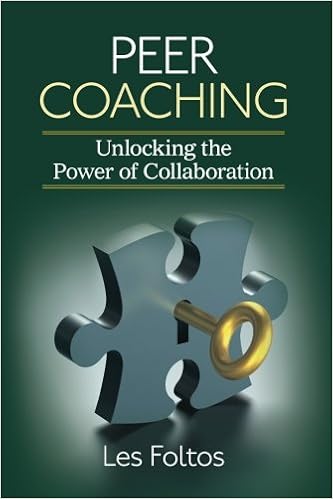
Book Review: Peer Coaching

Image result for peer coaching unlocking the power of collaboration 

This year I was the Title 1 Technology Facilitator for my school and at the end of the year I was given this book for some summer reading. Honestly, I looked at and immediately thought, how does this pertain to me? I'm a classroom teacher. We don't have coaches at my school. I doubt this is in the budget. So why? But I decided to give it a go and I am so glad that I did!

The book walks the reader through an introduction of what a coach is, why we should have coaches, and then takes you through the preparation necessary to become a coach and the roles of a coach. While I don't see peer coaching in my near future, I was able to take many ideas from this book into my every day teaching and possibly bring some ideas back to my principal.

One of the first take-aways from this book is that there should be collaboration between teachers, and in order to have this collaboration teachers must have respectful and trustworthy relationships. Another important aspect of collaboration is communication. In order for teachers to collaborate, they must have strong communication skills that include active listening, paraphrasing, and questioning.

My second take-away is around feedback. When collaborating with a teacher (whether in a coaching role or not), we have to begin moving away from "nice conversation" and focusing on the teacher. Instead, we need to focus on the students and how engaged they are in a lesson, as well as, ask probing questions that will allow reflection on teaching practice and lessons.

Another take-away is that a learning activity can have four characteristics. It can be a standards-based task, engaging task, problem-based task, or technology enhanced task. An effective learning activity should have some characteristics from each of the four characteristics. The tasks that we are asking students to do should include real-world problems and develop 21st century skills. These real-world problems need to have meaning to the students and draw on their current knowledge, skills, beliefs, and passions.

Once a learning task has been created (more specifically, once you have identified what it is that you want the students to know and be able to do), you need to include standards. There are three types of standards. First, curriculum standards. Then each learning task should have a 21st century standard, as well as, a technology standard.

An effective learning task should have directions that offer the students a "road map to solve the task their teacher outlined" (p. 126). It should also give students choices in what and how they learn. This task should also have assessments. There should be an end-of-activity lesson, but should also have formative assessments throughout the task that give the students opportunities to receive feedback.

The last take-away for me focuses on integrating technology. This quote sums up many teachers thoughts perfectly, "When it comes to integrating technology into classroom learning, part of the teachers' dilemma is deciding what technology to include." Another problem is that new technology is created so quickly that teachers don't feel like they can keep up. This is where collaboration with teachers comes in handy. If there is a type of technology that a teacher would like to use, but is not comfortable using, there may be a teacher in the school that is comfortable that would be able to help that teacher. Another possible solution is letting the students have choice when it comes to choosing technology. Let's be honest, most of them know more about technology that we do! I love to use technology in my lessons and I guess I have never really thought about it this way, but I really liked how this book says that technology supports a learning task. We should never think about technology first, but rather come up with a learning task, connect it to standards, and then determine where technology can be added to the task. "Technology is not transforming learning; it is just a tool the students in these activities used to reach the goals of the learning activities." (p. 145)

If you are someone who is interested in becoming a Peer Coach or starting a Peer Coaching program at your school, this book is a good place to start!  If you are not interested in Peer Coaching, but would like to learn more about collaboration and how to create effective learning tasks then this book is for you as well.