Showing posts with label book review. Show all posts

Thursday, December 31, 2020

2020 Review in Books

Let's be honest, no one wants to write about their 2020. One of my goals for this year was to read more for pleasure. (aka non-educational books) That happens to be one of the goals that I actually accomplished!

So instead of writing about my year, I decided to share all of the books that I read.

All images link to the book on Amazon.


It is always fun to me to look back at the books I have read throughout the year. I will admit it has been a LONG time since I have read this many, but it is almost like a journey through the year.

I know many people are happy to see 2020 come to an end. No matter what this year brought you, I hope that 2021 brings you everything you hope for and more!

Happy New Year! (PS - what books should I read this year??)


Instagram: @mrspotterstyle
Twitter: @apotter730


Thursday, December 17, 2020

Setting Boundaries (Again)

Well this blog post didn't age well...

In December I wrote a blog post about how I was learning to say no. It was making my life much less stressful by putting myself first, especially at work. I had learned that I can say no to something and life will go on.

A couple of weeks ago I came across a book called Boundaries on Amazon Prime. I added it to my library and started reading it as I finished my previous book. (One of my 2020 goals is to read more for pleasure.)


This book confirmed everything I had been feeling this school year. I was learning to set boundaries in my work life. I was learning that when you set a boundary, not everyone is going to like it, but if they truly respect your relationship they will understand.

This book touches on more than just work. It focused on friends, family, children, significant others, and more. While I was working on setting my boundaries at work, this helped me also look at all aspects of my life and where else I needed to work on boundaries.

I am starting 2020 off much happier than I was about 5 months ago and I can’t wait to see what the rest of this year brings!

Thursday, October 8, 2020

Personal Dictionary and Vocabulary Instruction

This post is one of my follow-up posts from the book Culturally and Linguistically Responsive Teaching and Learning by Sharroky Hollie.


This book discusses three focuses with vocabulary instruction.
  • honor the words students bring from home
    • we need to expand their home vocabulary to include academic vocabulary
  • equip students with skills for success
    • we are not teaching memorization of words, we need to teach strategies for word acquisition
    • we need to help develop usage of the words of academic vocabulary
    • we need to influence word choice, especially in teaching situational appropriate
  • utilize tools for success
    • personal dictionary
    • personal thesaurus

Here are 5 steps for teachers to use for vocabulary instruction:
  1. Select vocabulary or "tier" words based on frequency and relevance to the topic being taught
  2. Teach the Tier 2 or academic words as concepts, not as words to memorize (focus on 5-7 words during vocabulary instruction)
  3. Use a personal thesaurus to develop synonyms and antonyms
  4. Use vocabulary strategies to develop meaning and representation
  5. Use a personal dictionary to develop Tier 3 or content-specific words

Tiered Words:
  • Tier One - common, everyday words
  • Tier Two - "words that students should know as mature language users"
  • Tier Three - content-specific words that students should be aware of, but will not come across on a regular basis
**remember we are teaching the Tier 2 words during vocabulary instruction

Vocabulary Acquisition Strategies:
  • using context clues
  • memorizing the meanings of word parts
  • developing synonyms and antonyms

I love the idea of a personal dictionary and thesaurus, especially during virtual learning. It is extremely easy to have students use a dictionary and thesaurus digitally. I created two different versions of the dictionary, one for primary students and one for intermediate students.

The primary dictionary is going to be more like a visual dictionary. Remember that these should be those Tier 3, content-specific words that students should be aware of, but not necessarily use or see every day. In the kindergarten and first grade level, these digital dictionaries could be completed as a class rather than individually.


The intermediate dictionary is going to be a little more detailed. Rather than having just words and images, we are adding the definition and a personal connection to the word. This allows the students to own the word when they make that personal connection. 


Just like with the dictionary, for the thesaurus there will be 2 versions, one for primary and one for intermediate. The primary thesaurus is going to focus more on using higher-levels words for basic words that students use on a daily basis. There will be one slide for each word that the teacher or student wants to add to the presentation, and then the student or teacher can add synonyms and antonyms for that word on the slide.


The intermediate thesaurus is going to be more for building academic vocabulary. The slides are set up so that students can add the word that they "own". They then will come up with their own synonyms for that word. The teacher is then going to help them come up with those Tier 2, academic vocabulary synonyms and antonyms, to help students deepen their understanding and their academic vocabulary.


If you want students to have their own copy of the digital dictionary or thesaurus, I would recommend sharing the presentations with students through Google Classroom and choosing the option to make a copy for each student. When you do this, all students will get their own personal copy, but it also puts a copy of their dictionary/thesaurus in your Google Drive. This is helpful if you want to add anything to a specific child's dictionary.

Instagram: @mrspotterstyle
Twitter: @apotter730


Thursday, September 17, 2020

Book Review: Culturally and Linguistically Responsive Teaching and Learning


I picked up this book from Amazon to broaden my horizon with the different cultures I teach in my classroom. This is a book that focuses A LOT on relationships and that is something that I feel I do pretty well with in my classroom, but it did help me open my eyes to things I have definitely done over the course of my 10 years in teaching.

The book is broken up into three parts. It starts off discussing mindset, because let's be honest, if you aren't willing to grow as an educator, then reading a book like this is going to be pointless. It then discusses the skillsets needed to be culturally and linguistically responsive (management, vocabulary, academic literacy, academic language, and learning environment). The last section makes you step back and take a look at yourself. Where are you currently at with being culturally and linguistically responsive, where should you go from here? One of my favorite things it he Appendices section that is FULL of resources that help teachers wherever they may be on their journey to being culturally and linguistically responsive.

Being culturally and linguistically responsive in your teaching practices "means that teachers jump into the pool with the learners, guide them with appropriate instruction, scaffold as necessary, and provide for independence when they are ready." I absolutely love the jumping in the pool metaphor. Think about it, when teaching kids how to swim, you don't stand on the side of the pool and tell them what to do, you jump in the pool and show them. We must do the same with teaching.

Taking a moment to be vulnerable... I will be honest. I have often corrected students for their language. I am not just talking about those students who are learning the English language, I am also talking about those students who may speak a vernacular of English. This book made me realize that their language is not wrong, it is part of their culture. The suggestion that Hollie gives in the book is teaching the students to "translate" to academic language, rather than "correcting" their language. This is so important because teaching the students to "translate" to academic language in the school building teaches them that there is nothing wrong with the language they are speaking at home.

Here are some takeaways from the book:

  • be an advocate for those who cannot advocate for themselves
  • culture is not the same as race, there are so many cultures within one race and we need to be mindful of that
  • language as culture, "our language is a representation of our heritage, including family, community, and history"
  • "students are not the problem but rather the source of the solution", such an important mindset to have in the teaching world. If we dig deeper to understand students, we will stop seeing them as the problem.
  • language comes with a variety of linguistic behaviors, we must validate and affirm these different behaviors rather than looking at them as deficits
  • "respect is not given on general principle; it is earned over time"
  • some behaviors that schools deem as negative, are just cultural behaviors; acknowledge the culture then redirect to school culture
  • the goal of being culturally and linguistically responsive is to adjust our teaching in order to meet the needs of students who are "culturally misunderstood"
Relationships matter. Get to know your students, not just academically, but culturally and linguistically. Understand where they are coming from. Before jumping to conclusions about their behavior, think about the why behind their behavior.

This book has some great ideas and is full of resources to help any teacher, no matter where they are in their journey to truly pause and think about how they can be more culturally and linguistically responsive.

Instagram: @mrspotterstyle
Twitter: @apotter730

Sunday, August 2, 2020

My Letter to a Young Teacher

**fun fact - I started this post 3 years ago. I stumbled across it today and decided that this year is the PERFECT year to complete it.

Image result for letters to a young teacher

I recently finished the book Letters to a Young Teacher by Jonathan Kozol and it inspired me to write my own letter to young/new teachers.  My school actually chose this book as a book study throughout the year during staff meetings and to be completely honest, I did not read it then. This summer I have been on a kick reading educational books that I have had on my shelf, as well as, some new ones that I have been wanting to read.  I read another one of Kozol's book in college titled Savage Inequalities and enjoyed how he gave eye-opening, honest facts of the inequalities in schools across the United States. This book does very much of the same when it comes to things that first year teachers may/will experience in their own classroom.

*you may have the perfect lesson plan and nothing will go as planned
*some of the best lessons you will teach, won't have a lesson plan written up at all
*those memes about your students are absolutely true, there's always that one student who you will need a break from that is never absent
*the students who need your attention the most, will ask for it in the worst ways
*there will be parents that you will never meet, it isn't because they don't care or aren't supportive
*there will be parents who you will meet too much
*just when you think you have the curriculum down, the county, state, or country will change something
*there are SO many acronyms in the education world (don't know what something means, just ask, we've all been there)
*there is a lot of "educational jargon" which is basically 5 different ways to say one thing

Monday, June 29, 2020

Book Review: Becoming the Educator They Need

Becoming the Educator They Need: Strategies, Mindsets, and Beliefs for Supporting Male Black and Latino Students
click on image to go to Amazon.com

In light of everything that has been going on in the country lately, our assistant principal decided to host a book study using this book. Our school is made up about 49% Black students, 49% Latino students, and the other 2% a mixture of white and Asian.

My one big takeaway from this book.... RELATIONSHIPS MATTER!!

Robert Jackson speaks about his own experiences growing up as a Black boy and the struggles that he faced. He also became an educator and shares his experiences in dealing with Black and Latino students, especially the boys.

Here are some quotes from the book the resonated with me:
  • "When educators take one look at some young men of color, they judge them based on the fact that they look like what they perceive offenders look like."
  • "Appearance alone should not result in a young man being labeled 'not teachable'."
  • "Your stereotypes and biases can be dream killers. If you choose to be open and accepting, you can become a dream restorer."
  • "There is no perfect educator out there. Everyone has flaws. Having empathy will give you what it takes to turn any student around."
  • "When you feel sorry for your students, your expectations of them are lowered."
  • "You cannot teach those who you can't reach."
  • "Educators lose opportunities for their students to see their human side when they walk around acting as though they don't make mistakes."
While I feel that one of my strengths as an educator is my relationship with my students, I always feel I have room to grow. This book allowed me to open my eyes to perspective of my Black and Latino students. They may act like they don't care, they may have days where they want to have their hood up all day, but as educators rather than focusing on the negative, we need to try to get to know them and understand why they feel this way or why acting a certain way, because 99% of the time there is something else going on in their life that we probably don't know about.

My first year of teaching in 2010, I had a Latino student who I struggled with all year. Just recently, he found me on social media and sent me a message just to say hi and let me know that he graduated from high school this year. Relationships matter. I never gave up on him and the fact that he reached out to me 10 years later means that he knows I cared.

If you teach Black or Latino students this is a quick, easy read that will have a lot of impact on your thoughts as an educator and how you can better serve these students.

One last quote from the book that really stuck with me...

"To educate the mind, you must first capture the heart."


Monday, July 9, 2018

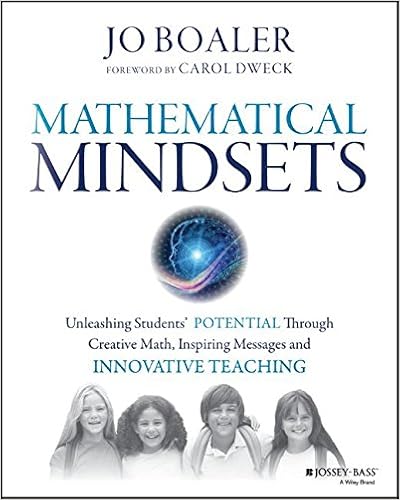
My New Mathematical Mindset

Image result for mathematical mindsets
I'm really sad that I came across this book, Mathematical Mindsets by Jo Boaler, after 8 years of teaching because I think of the past 8 years and how differently I could have been teaching math. However, the past is in the past and while I may not have been teaching math the best way, I did make sure my students enjoyed math even if they felt they "weren't good at math".

After reading this book I have come up with my list of things I will do moving forward in my math instruction:

  • I will tell my students on the very first day of school that they are all mathematicians and everyone of them will enjoy math at some point this school year. I will no longer allow them to say "I'm not good at math" or "I'm not a math person".
  • I will establish the seven math norms created by Jo Boaler in my classroom to help set my expectations of them as math students in my classroom. (see my posters here)
  • I will no longer use programs that encourage fast recall of math facts.
  • I will use low floor, high ceiling tasks that will push all students to work at the highest level.
  • I will no longer assign meaningless homework, but rather have students reflect on what they learned that day.
  • I will push my students to create a visual representation of problems.
  • I will allow my students to explore first rather than teach methods/procedures.
  • I will ask my students to reason and critique others by convincing themselves, convincing a friend, and convincing a skeptic.
  • I will teach students to work together by establishing group norms and roles.
  • I will make sure my students know I am not necessarily looking for an answer, but rather how they get there (and that there are often multiple ways to get there).
  • I will provide constructive feedback and take the focus off of the grade.
  • I will give assessments for learning that will allow my students to see where they are now, where they need to be, and provide feedback for ways to close the gap.
  • I will slow down and go deep into math topics rather than rush through them to keep on pace with the curriculum guide.
  • I will provide real-world context for math problems when appropriate.
While this list seems long, many of the things I am already doing some form of it in my classroom, this list is more to hold me accountable as I begin looking at my lessons in the beginning of the year.

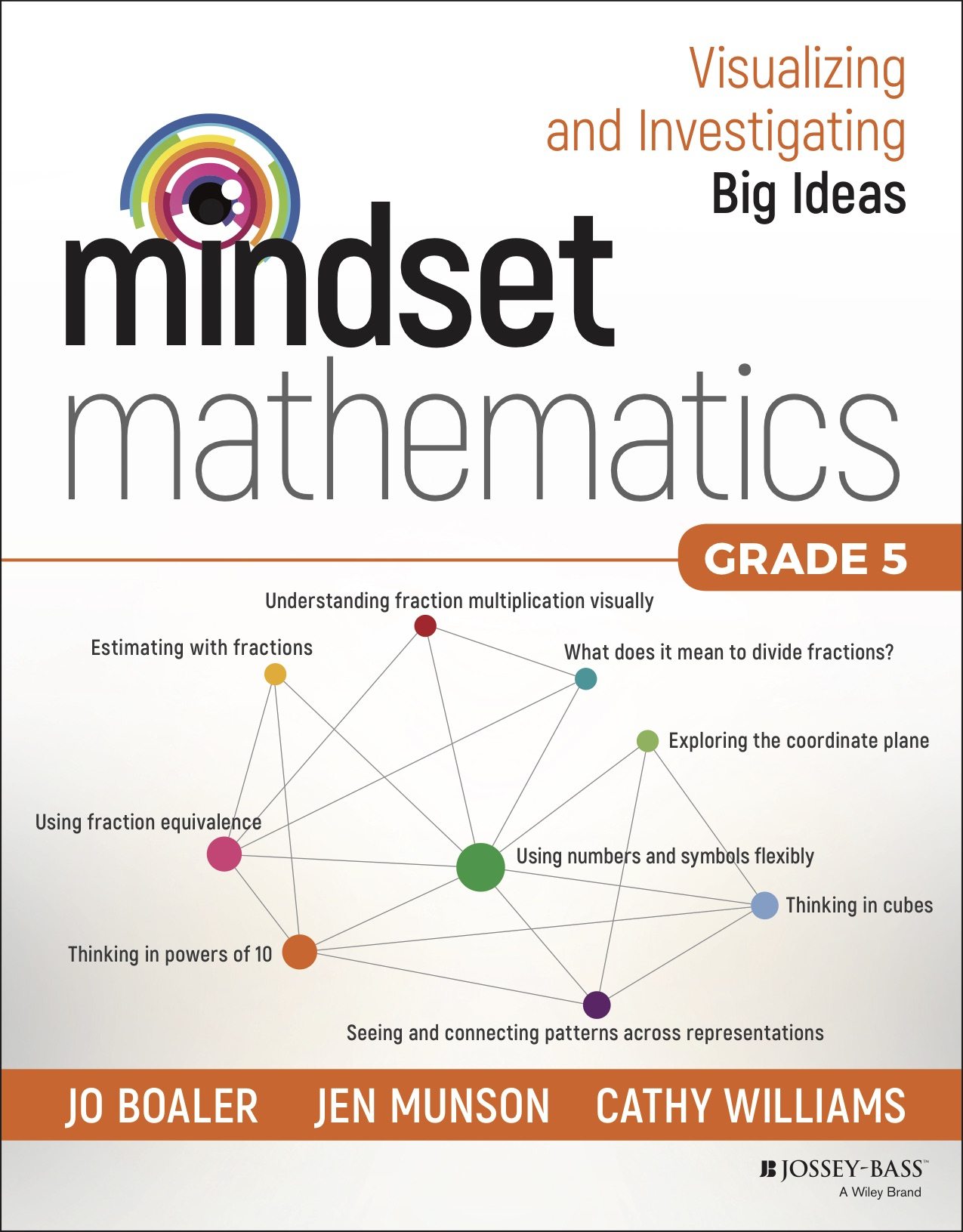
Next up on my reading list is the Mindset Mathematics, Grade 5 by Jo Boaler, Jen Munson, and Cathy Williams!
Image result for mindset mathematics grade 5

Friday, July 6, 2018

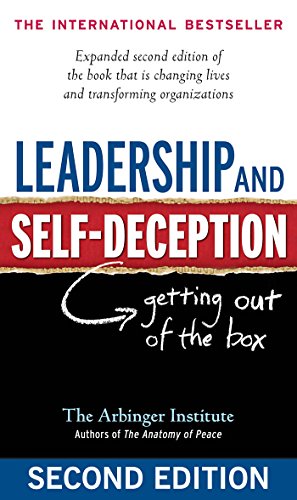
Book Review: Leadership and Self-Deception

I was given the book, Leadership and Self-Deception, by the Arbinger Institute last summer. However, having just come back from maternity leave, I set it on my shelf and left it. While cleaning up my room at the end of the school year I decided to bring it home and it happened to be the first book I picked up this summer.

It was a surprisingly easy book to get through (done in 2 days), but it definitely opened my eyes to the types of people that I will encounter as a teacher leader and hopefully as an assistant principal one day. I should hopefully be completing my administration internship this year and am beginning to open my eyes to look at things from not only a teacher perspective, but also an administration perspective.

This book was all about being "in the box" and being "out of the box". I created a sketchnote about my takeaways from the book:

My biggest ah-ha moment came at the end of the book, where there was a list of things that you should and should not do in order to stay out of the box. On my sketchnote are the two quotes that resonated with me the most as a leader.

  • "Don't focus on what others are doing wrong. Do focus on what you can do right to help."
As a leader, it is easy to want to focus on what teachers are doing wrong, however, in order to stay out of the box (and keep that teacher out of the box) we need to focus on what can I do as a leader in order to help that teacher.
  • "Don't worry whether others are helping you. Do worry whether you are helping others."
I often hear this type of situation at the teacher level. There are teachers who enjoy sharing their lessons, activities, ideas, etc. and there are teachers who don't. We have to stop worrying about whether everyone is sharing or helping us and instead focus on am I helping others.

I would like to say that I am "out of the box" most of the time in my life and career, but as I was reading it definitely made me think of times that I was "in the box" and made me think about why I may have felt that way.  This is a great book, not just for the education world, but for any business/company.

Image result for leadership and self-deception

Monday, August 14, 2017

Google Infused Classroom

Image result for google infused classroom

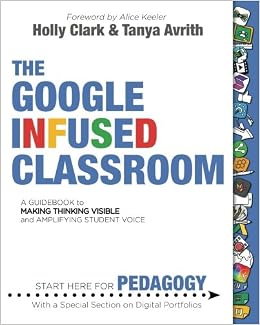
If you teach in a school that has access to Google Apps then this book is a must-have!!  This book is all about infusion, which means how you can use two or more of the tools together at one time.

I absolutely love the way this book is organized. It is a resource rather than a read from cover to cover, which is awesome. The beginning of the book is all about pedagogy and the hows and whys of educational technology. The middle to end of the book is all of the tools that can be used in the classroom. Each tool is broken down into what it is, why its great, how easy it is to use, what the students do with the tool, and how they share the information. The tools are broken into different categories: assessment tools, tools for differentiation, tools for demonstrating learning, tools for reflecting, and a section on digital portfolios.

I was planning to try out portfolios with my students this year and after reading this book we will be setting them up the first week of school using Google Sites.

Saturday, July 22, 2017

Book Review: Peer Coaching

Image result for peer coaching unlocking the power of collaboration 

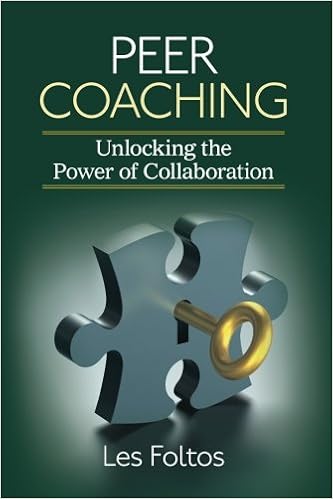
This year I was the Title 1 Technology Facilitator for my school and at the end of the year I was given this book for some summer reading. Honestly, I looked at and immediately thought, how does this pertain to me? I'm a classroom teacher. We don't have coaches at my school. I doubt this is in the budget. So why? But I decided to give it a go and I am so glad that I did!

The book walks the reader through an introduction of what a coach is, why we should have coaches, and then takes you through the preparation necessary to become a coach and the roles of a coach. While I don't see peer coaching in my near future, I was able to take many ideas from this book into my every day teaching and possibly bring some ideas back to my principal.

One of the first take-aways from this book is that there should be collaboration between teachers, and in order to have this collaboration teachers must have respectful and trustworthy relationships. Another important aspect of collaboration is communication. In order for teachers to collaborate, they must have strong communication skills that include active listening, paraphrasing, and questioning.

My second take-away is around feedback. When collaborating with a teacher (whether in a coaching role or not), we have to begin moving away from "nice conversation" and focusing on the teacher. Instead, we need to focus on the students and how engaged they are in a lesson, as well as, ask probing questions that will allow reflection on teaching practice and lessons.

Another take-away is that a learning activity can have four characteristics. It can be a standards-based task, engaging task, problem-based task, or technology enhanced task. An effective learning activity should have some characteristics from each of the four characteristics. The tasks that we are asking students to do should include real-world problems and develop 21st century skills. These real-world problems need to have meaning to the students and draw on their current knowledge, skills, beliefs, and passions.

Once a learning task has been created (more specifically, once you have identified what it is that you want the students to know and be able to do), you need to include standards. There are three types of standards. First, curriculum standards. Then each learning task should have a 21st century standard, as well as, a technology standard.

An effective learning task should have directions that offer the students a "road map to solve the task their teacher outlined" (p. 126). It should also give students choices in what and how they learn. This task should also have assessments. There should be an end-of-activity lesson, but should also have formative assessments throughout the task that give the students opportunities to receive feedback.

The last take-away for me focuses on integrating technology. This quote sums up many teachers thoughts perfectly, "When it comes to integrating technology into classroom learning, part of the teachers' dilemma is deciding what technology to include." Another problem is that new technology is created so quickly that teachers don't feel like they can keep up. This is where collaboration with teachers comes in handy. If there is a type of technology that a teacher would like to use, but is not comfortable using, there may be a teacher in the school that is comfortable that would be able to help that teacher. Another possible solution is letting the students have choice when it comes to choosing technology. Let's be honest, most of them know more about technology that we do! I love to use technology in my lessons and I guess I have never really thought about it this way, but I really liked how this book says that technology supports a learning task. We should never think about technology first, but rather come up with a learning task, connect it to standards, and then determine where technology can be added to the task. "Technology is not transforming learning; it is just a tool the students in these activities used to reach the goals of the learning activities." (p. 145)

If you are someone who is interested in becoming a Peer Coach or starting a Peer Coaching program at your school, this book is a good place to start!  If you are not interested in Peer Coaching, but would like to learn more about collaboration and how to create effective learning tasks then this book is for you as well.
Monday, July 17, 2017

Book Review: Reading Nonfiction: Notice & Note Stances, Signposts, & Strategies

Image result for nonfiction notice and note

Fiction invites us into the imaginary world the author has created; nonfiction intrudes into our world, and purports to tell us something about it.”

After reading the first Notice and Note book by Kylene Beers and Bob Probst, I knew I had to read the nonfiction book. Just like with the first book, I got through this one in about 3-4 days. The authors have a way of writing that makes it easy to get through and makes you not want to put the book down.
The first section of this book is all about defining nonfiction (they really make you think twice about your own definition of nonfiction, what you were taught as a kid, and what you may/may not teach your kids now). Once they have defined nonfiction for all stages of learning, they again discuss rigor and complexity just like they did with fiction texts. The thing that stuck with me the most with rigor and complexity in the first book, was again mentioned in this book... reading a difficult text is not rigor, how a student is engaged with a text increases rigor.

Since this book is focusing on nonfiction, Beers and Probst include a section about disciplinary literacy. They do a great job of including how these strategies, signposts, etc. can be used across all content areas (math, science, social studies).  For someone like myself that teaches all subjects, I loved this because it will allow the students to see that they can use these strategies, etc. in all areas, not just reading class.

The next section of this book focuses on 3 "Big Questions" that students can be asking themselves as they read any and all nonfiction text.
  • What surprised me? (replaces "what did you learn?")
  • What did the author think I already knew? (students ask this when confused)
  • What challenged, changed, or confirmed what I already knew? (teaches children that it is ok to change your mind)
The next section of the book focuses on the signposts. There are five signposts for nonfiction text.
  • Contrasts and Contradictions
  • Extreme or Absolute Language
  • Numbers and Stats
  • Quoted Words
  • Word Gaps
I love these signposts because they should be easy to spot for the kids when reading nonfiction, but the questions that go along with them help the students to slow down and really think about what the author is saying in the text.

The last section of this book focuses on strategies that the teacher/students can use before, during, and after reading. These strategies are tools that the teachers and students can use to scaffold our thinking process.

As with the first Notice and Note book, I loved this book and can't wait to use it in my classroom. Our unit for quarter 2 is all about nonfiction, so stay tuned come November for examples of ways I am using it in my room!

Tuesday, July 11, 2017

Book Review: Notice and Note: Strategies for Close Reading

Image result for notice and note book image

I was first introduced to this book three years ago at a conference I attended over the summer. To be completely honest, we did some hands-on activities, I got some digital resources, and I didn't think much else about it. It wasn't that I didn't want to know more about the book and its signposts, it was just bad timing. I was getting ready to begin my first full year of teaching in Maryland (I was hired in January by the county I currently work for after teaching for 3 years in Virginia) and I was changing grades. I was so overwhelmed by these Common Core Standards, this new curriculum I was getting ready to have to teach, and working in a school where I still felt like the new person that taking on another thing when it came to teaching would have pushed me over the edge.

Flash forward three years and now I feel like I am finally at a place where I can try new things. One of my team members used this book this past school year and loved it, so I figured I know a little bit about it, I have someone close to me that has used it in the classroom, let's give this a try.

I decided to read this book first out of my long list of summer break reads. Let me just say that I finished the book in 3 days! And that's on top of being home with a 2-year old and a newborn. (thank goodness for nap time!)

As soon as I began reading, I knew right away that I would be using this resource in my classroom next year. Throughout the entire book I was taking notes, making lesson plans, creating charts for me to reference. I created a new folder in my Google Drive and filled it up with anchor charts and the aforementioned items. I already looked at the texts that we use at the beginning of the year to see if any of them have some of these signposts that are mentioned in the book (they do!). Check back this fall and I will blog about my experience teaching the signposts to my fifth graders.

One of my favorite things about the book was how easy it was to read. It has a great layout. It begins with the research behind the signposts, then explains the signposts, and ends with lessons that you can use or adapt to teach the signposts in your classroom. I especially like the lessons. Even though I teach at the elementary level and many of the lessons were middle school or high school examples, it was nice to be able to see the language that was used to introduce the signposts.

If you teach reading at any level, this is a definite must-read! I have already moved on to the Nonfiction follow-up. Stay tuned for that review...


A few quotes from the book I highlighted:

”Close reading should suggest close attention to the text; close attention to the relevant experience, thought, and memory of the reader; close attention to the responses and interpretations of other readers; and close attention to the interactions among those elements.”

”It was the transaction - the interaction - between the reader and the text that created meaning.”

”The problem isn’t that we ask all students to read the same book. It’s that we expect them to read it in the same way.”